Stop Hunting Checkmates — Start Blocking Your Own
Most chess advice is about attacking — look for combinations, spot the mate in three, pressure weaknesses until your opponent cracks.
That’s exciting. It feels powerful. And when it works, it’s glorious.
But here’s the truth: the majority of games — especially for amateurs — are lost, not won.
And they’re usually lost because someone overlooked their own vulnerabilities while chasing a flashy victory.
The Seduction of the Attack
We’ve all done it:
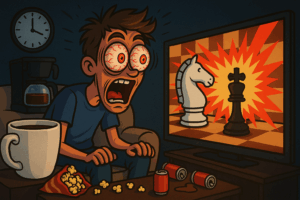
You see your opponent’s king looking drafty.
You imagine the perfect sequence: rook lift, queen swing, checkmate in style.
You push forward… and then realize your back rank is unguarded, your knight was defending a crucial square, or your opponent’s counterplay is faster than your own.
In your head, you were the hunter.
In reality, you became the prey.
Defense Is Not Passive
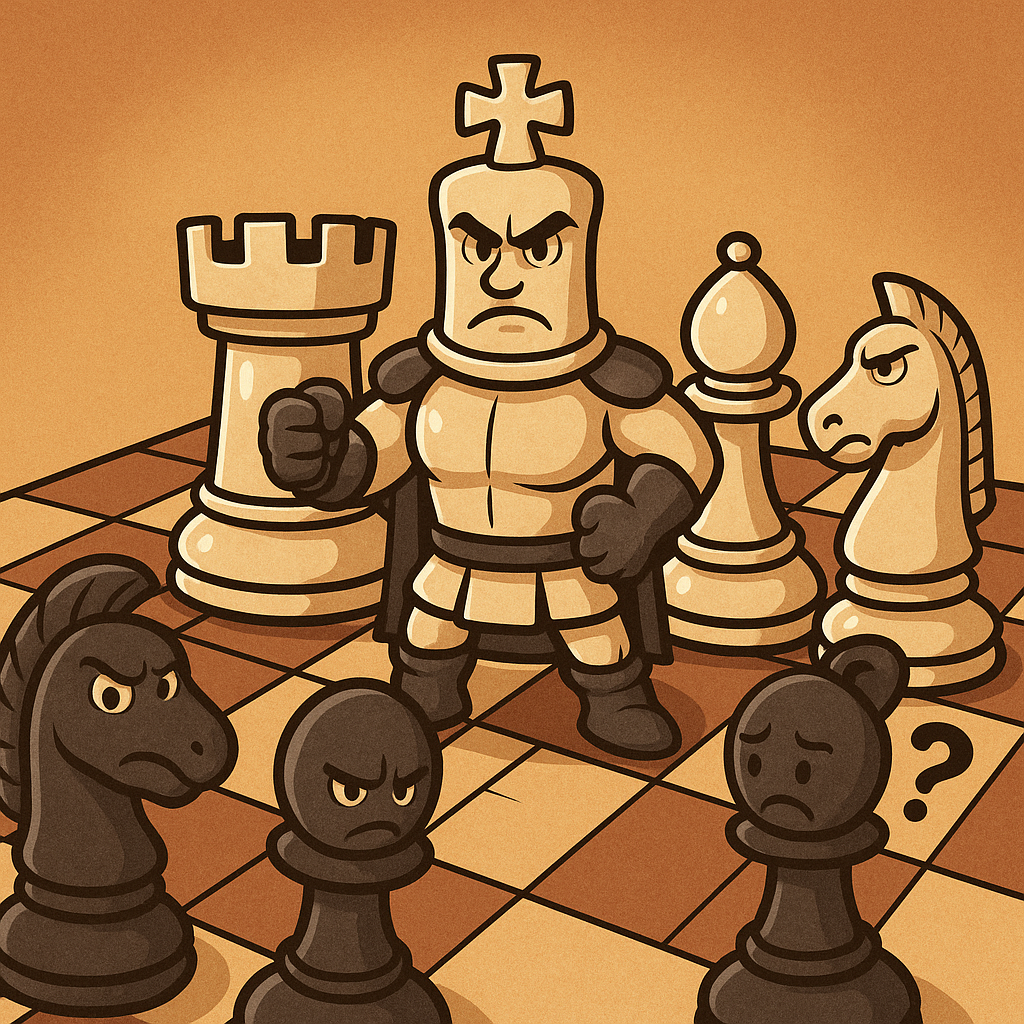
Preventing your own checkmate isn’t about turtling up in fear. It’s about building a position that’s hard to crack.
Strong players are constantly asking themselves:
If it were my opponent’s move, what’s their most dangerous threat?
What happens if I do nothing?
Which piece, if removed, will suddenly make me vulnerable?
When you think this way, you start spotting traps before you fall into them. Your king stays safe, your pieces stay coordinated, and your attack, when it comes, is built on solid ground.
The Life Parallel
In life, “checkmate” moments happen when we’re blindsided — financially, professionally, or personally — because we were too busy chasing something shiny to notice the risks.
The startup founder obsessed with growth, ignoring cash flow.
The relationship that looks picture-perfect on Instagram, but ignores the small resentments building under the surface.
The athlete pushing for peak performance without respecting recovery.
The best victories come not from reckless assault, but from a balance — advancing while protecting.
A New Mindset for Your Next Game (or Project, or Day)
Before each move, ask yourself:
What’s my opponent’s fastest path to checkmate me?
What one move could they make that would ruin me?
What can I do right now to take that option away?
When you stop thinking only about delivering checkmate and start thinking about avoiding it, you won’t just lose less often — you’ll win more often, and more cleanly.