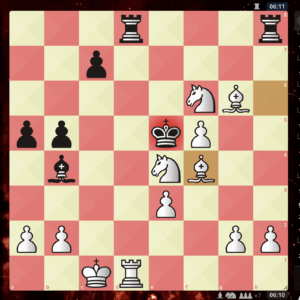

In chess, every move matters — sometimes more than we realize. A single piece, shifted just one square, can transform a position from solid to shaky, or from defensive to dominant. This is what makes chess such a rich and strategic game: the entire dynamic can change with just one move.
The Importance of Position
At its core, chess is about control — of squares, lines, and tempo. A piece’s value isn’t just its point count (like 3 points for a bishop or knight); it’s also about how active and influential it is on the board. Even a small positional change can open new threats, free other pieces, or restrict the opponent’s plans.
A Classic Example: The Knight That Changed Everything
Let’s look at a simple but powerful example.
Imagine this position:
White has a knight on f3, controlling the center but somewhat passive.
Black’s queen is eyeing the kingside.
White’s bishop and rook are ready, but there’s no immediate attack.
Now, White plays Ng5 — moving the knight from f3 to g5.
This small change has a ripple effect:
The knight now attacks the sensitive f7 square, often a weak spot near the black king.
The queen can suddenly join the attack with Qh5.
Black must respond defensively — perhaps with g6 or Qe7 — weakening their pawn structure or losing time.
In just one move, the entire momentum of the game has shifted. White, who was previously building quietly, now has an immediate attacking opportunity. What looked like a balanced position turns into a tactical battle.
The Lesson
In chess, a single piece’s activity can mean more than material advantage. Shifting a knight, bishop, or even a pawn can change the character of the game — from quiet maneuvering to a full-blown attack.
Next time you play, don’t just think about where your pieces are — think about where they want to be. Sometimes, moving a single piece to the right square is all it takes to change the entire dynamic of the board.