Why Controlling the Center of the Chessboard is Essential for Winning
In the world of chess, one principle has stood the test of time: control the center. Whether you’re a beginner learning the basics or a seasoned player sharpening your opening repertoire, understanding the importance of central control is crucial to improving your game.
But why is the center so important?
What Is the Center?
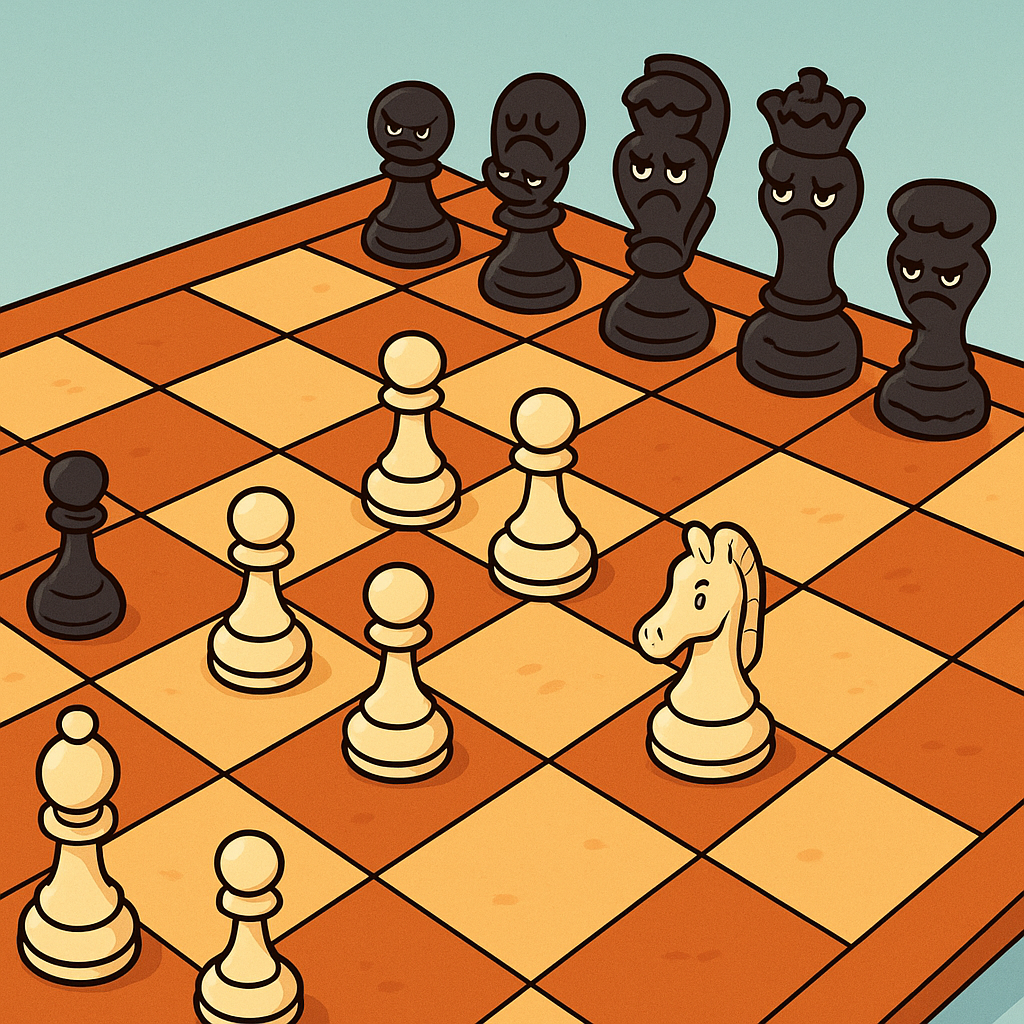
In chess, the center refers to the four central squares: d4, d5, e4, and e5. These are known as the “central squares.”Broader definitions also include the surrounding squares like c3–c6 and f3–f6, sometimes called the “extended center.”
1. Greater Mobility for Your Pieces
Controlling the center allows your pieces—especially knights and bishops—to influence the board more effectively. For instance, a knight on e4 or d4 controls up to 8 squares, whereas the same knight tucked in the corner (say on a1) controls only 2. Centralized pieces are more powerful, more flexible, and quicker to support either flank of the board.
2. Freedom to Attack or Defend
A strong presence in the center makes it easier to launch attacks or shift your pieces to defend against threats. When you dominate the center, you essentially dictate the pace of the game. Your opponent is often forced to react, giving you the initiative—a key advantage in competitive play.
3. Restricting Your Opponent’s Options
If you control the center, your opponent will struggle to develop their pieces freely. Their knights might get pushed to the edge of the board, bishops blocked, and pawns cramped. This positional advantage can build pressure and lead to tactical mistakes or long-term weaknesses.
4. Smooth Development and King Safety
Most classical chess openings—such as the Ruy López, Italian Game, or Queen’s Gambit—aim to establish central control early, usually with pawns on e4/e5 or d4/d5. This enables smooth development of minor pieces and quicker castling, helping you secure your king and connect your rooks efficiently.
5. A Foundation for the Middlegame
Think of the opening as laying the groundwork for everything to come. If you emerge from the opening with strong central control, you set the stage for an effective middlegame—whether that means launching an attack, preparing a pawn break, or maneuvering for better positioning.
A Simple Rule for Beginners
If you’re new to chess, a great rule of thumb is:
“Develop your pieces toward the center, and don’t give up the center without a good reason.”
Avoid moving the same piece repeatedly or pushing side pawns early. Instead, focus on building a solid central presence.
Final Thoughts
Controlling the center is more than a textbook rule—it’s a strategic cornerstone that shapes the entire game. Whether you’re playing blitz online or grinding through a classical tournament, the player who controls the center often controls the outcome.
So the next time you sit down at the board, remember: Own the center. Own the game.