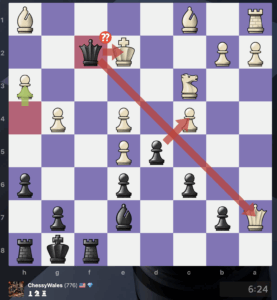

Every chess player has had that moment — you look at the board, your opponent’s pieces are perfectly placed, your king feels unsafe, and your pawns look like a mess. You think, “How did I get into this bad position?”
The truth is, bad positions don’t just appear out of nowhere. They’re the result of small inaccuracies that quietly pile up — a passive move here, an ignored threat there — until suddenly, you’re fighting for survival.
1. The Subtle Mistakes That Snowball
Most poor positions come from small positional errors rather than outright blunders. Maybe you developed a knight before a bishop, moved the same piece twice early on, or neglected to fight for the center.
Each of these decisions might seem harmless in the moment, but together they create long-term problems. Chess rewards precision — even one slow move can shift the balance.
Example:
You play 3…g6 against the Queen’s Gambit, thinking you’ll fianchetto later. But now your dark squares are weak, your center is gone, and your opponent’s pawns start rolling forward. A single decision changed the entire nature of the game.
2. Ignoring the “Why” Behind Moves
Many players know what moves to play, but not why. Following opening principles without understanding the purpose leads to robotic play — and once you’re out of book, you’re lost.
Ask yourself during every move:
What is this move trying to achieve?
How does it improve my position or restrict my opponent’s?
What are the weaknesses I’m creating?
Understanding these “whys” helps you prevent those mysterious positional collapses.
3. Overlooking Opponent’s Plans
We often focus too much on our own ideas and forget the opponent has their own. Good players constantly ask: What is my opponent threatening? What do they want next?
Ignoring their plan is a fast track to a bad position. By anticipating their strategy, you can defuse it before it becomes dangerous.
4. Emotional Decisions
Sometimes, a bad position comes from frustration or overconfidence. You might lash out with an unsound attack or grab a risky pawn because you want to turn the game around. Emotional chess is often losing chess.
When things start slipping, pause and stabilize. Defend first, then counterattack when the opportunity arises.
5. Learn to Recognize the Warning Signs
Before the position becomes hopeless, there are always warning signs:
You’ve stopped controlling the center
Your pieces have limited mobility
You’re responding, not creating threats
Your pawn structure is crumbling
When you see two or more of these signs, it’s time to reassess — and fix the direction of the game before it’s too late.
Final Thought
Every bad position is a lesson in disguise. Instead of blaming luck or your opponent, use that moment of frustration to look back and understand where it started to go wrong. The more you analyze these turning points, the fewer times you’ll find yourself asking, “How did I get here?” — and the more you’ll start asking, “How did I build such a strong position?”