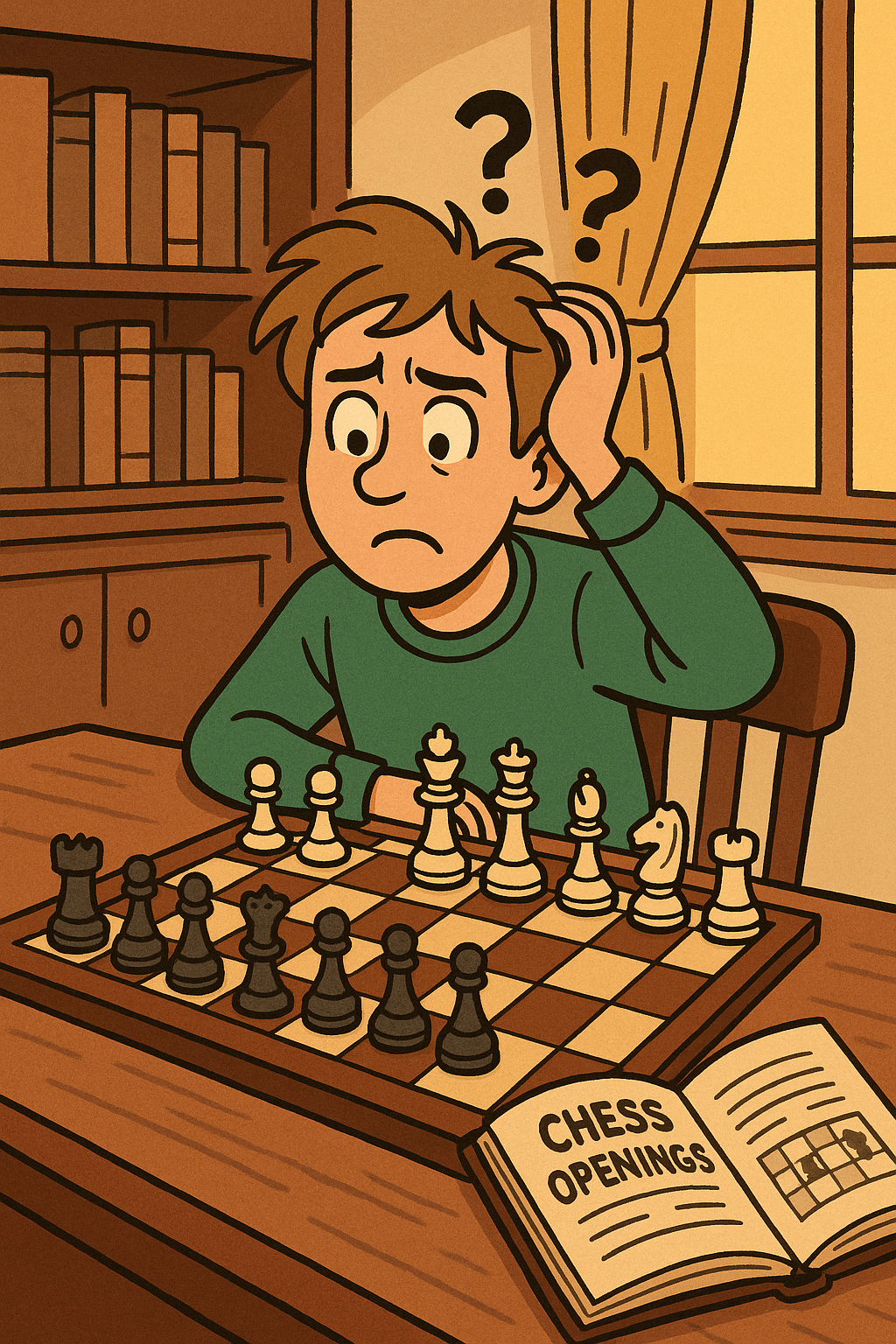
As a beginner learning chess, one of the most overwhelming parts is figuring out openings. I know the names like the “Sicilian Defense,” “Ruy López,” and “Queen’s Gambit” sounded good but don’t know what they are. I’d also see YouTuber’s rattling off 10-move sequences while I’m trying not to hang my queen in the first five moves.
So I started wondering: Do chess openings really matter when you’re just starting out?
What I First Thought About Openings
At first, I picked two openings, one for white and one for black, and bought the Chessable courses. I thought learning an opening meant memorizing a long list of moves. I figured that would help my play but usually the games were way off track by move five.
What I quickly realized is that memorizing moves, which I wasn’t going to do anyway, doesn’t help much.
What I’ve Learned So Far
As I played more games (and made more blunders), a few things started to click:
-
Openings are not set in stone. Be felxable.
-
The goal is to control the center, develop, castle.
-
Focusing on principles instead of memorized moves will usually turn into a pretty decent openings.
What Helped Me the Most
I picked one opening for White and one for Black and just played them consistently. For example, I started with the London as White and a Caro-Kann as Black. Just because those were some of the first vids I found.
-
Doing puzzles to help recognize patterns
-
Practice habits more. (Thanks to GM Aman Hambleton vids.)
-
Try to defend as much as possible.
I also started watching videos on those things. Understanding why you develop your knights before your queen, or why center control matters, gave me more confidence and flexibility when things went off the rails.
My Advice As a Beginner
If you’re just starting out, here’s my take:
-
Openings matter to give you an idea of what to play—but principles matter more than memorization.
-
Pick one or two simple openings and learn them well.
-
Don’t stress about fancy names or deep theory.
-
Tactics, checkmate patterns, defending and not blundering pieces matter mor, because that’s where games are usually won or lost.
Final Thoughts
I use openings as a guideline to get me going.